Diabetes Symptoms | ||||
| Diabetes can and often does go undiagnosed because the symptoms can seem harmless and oftentimes normal. Some diabetes symptoms include:
Type 1 Diabetes Symptoms
Type 2 Diabetes Symptoms
| ||||
Wednesday, November 12, 2008
Diabetes
Cold and Flu
Is It a Cold or the Flu?
Below are cold symptoms and flu symptoms. See the differences and similarities between a cold and the flu.
| Symptoms | Cold | Flu |
| | ||
| Fever | Rare | Characteristic, high (100-102°F); lasts 3-4 days |
| | ||
| Headache | Rare | Prominent |
| | ||
| General Aches, Pains | Slight | Usual; often severe |
| | ||
| Fatigue, Weakness | Quite mild | Can last up to 2-3 weeks |
| | ||
| Extreme Exhaustion | Never | Early and prominent |
| | ||
| Stuffy Nose | Common | Sometimes |
| | ||
| Sneezing | Usual | Sometimes |
| | ||
| Sore Throat | Common | Sometimes |
| | ||
| Chest Discomfort, Cough | Mild to moderate; hacking cough | Common; can become severe |
| | ||
| Complications | Sinus congestion or earache | Bronchitis, pneumonia; can be life-threatening |
| | ||
| Prevention | None | Annual vaccination; amantadine rimantadine or oseltamirvir (antiviral drugs) |
| | ||
| Treatment | Only temporary relief of symptoms | Amantadine, rimantadine, oseltamivir or zanamavir within 24-48 hours after onset of symptoms |
Cancer
Cancer Signs and Symptoms
Cancer gives you no symptoms or signs that exclusively indicate the disease. Every complaint for cancer can explain a harmless condition as well. If you have symptoms, however, you should see a doctor for further evaluation. Some common symptoms are as follows:
- Persistent cough or blood-tinged saliva
- These symptoms usually represent simple infections such as bronchitis or sinusitis.
- They could be symptoms of cancer of your lung, head, and neck. Anyone with a cough that lasts more than a month or with blood in the mucus that is coughed up should see a doctor.
- These symptoms usually represent simple infections such as bronchitis or sinusitis.
- A change in bowel habits
- Doctors sometimes see pencil-thin stools with colon cancer.
- Occasionally, cancer exhibits continuous diarrhea.
- Some people with cancer feel as if they need to have a bowel movement and still feel that way after they have had a bowel movement. If any of these abnormal bowel complaints last more than a few days, they require evaluation.
- Doctors sometimes see pencil-thin stools with colon cancer.
- Blood in your stool
- A doctor always should investigate blood in your stool.
- Hemorrhoids frequently cause rectal bleeding, but because hemorrhoids are so common, they may exist with cancer. Therefore, even when you have hemorrhoids, you should have a doctor examine your entire intestinal tract when you have blood in your bowel movements.
- X-rays may be enough.
- Sometimes, when the source of your bleeding is entirely clear, these studies may not be needed.
- X-rays may be enough.
- A doctor always should investigate blood in your stool.
- Unexplained anemia
- Anemia is a condition in which you have fewer than the expected number of red blood cells in your blood. Anemia should be investigated.
- There are many kinds of anemia, but blood loss almost always causes iron deficiency anemia. Unless there is an obvious source of ongoing blood loss, as there is for menstruating women, this anemia needs to be explained.
- Many cancers can cause anemia, but bowel cancers most commonly cause iron deficiency anemia. Evaluation should include endoscopy or x-ray studies of your upper and lower intestinal tracts.
- Anemia is a condition in which you have fewer than the expected number of red blood cells in your blood. Anemia should be investigated.
- Breast lump or breast discharge
- Most breast lumps are noncancerous tumors such as fibroadenomas or cysts. But all breast lumps need to be thoroughly investigated.
- A negative mammogram result is not sufficient to evaluate a breast lump.
- Generally, diagnosis requires a needle aspiration or biopsy (a small tissue sample).
- Discharge from a breast is common. But some forms of discharge may be signs of cancer. If discharge is bloody or from only 1 nipple, further evaluation is recommended.
- A negative mammogram result is not sufficient to evaluate a breast lump.
- Women are advised to conduct monthly breast self-examinations.
- Most breast lumps are noncancerous tumors such as fibroadenomas or cysts. But all breast lumps need to be thoroughly investigated.
- Lumps in the testicles
- Most men (90%) with cancer of the testicle have a painless or uncomfortable lump on a testicle.
- Some men have an enlarged testicle.
- Other conditions, such as infections and swollen veins, can also cause changes in your testicles, but you should have any lump evaluated.
- Men are advised to conduct monthly testicular self-examinations.
- Most men (90%) with cancer of the testicle have a painless or uncomfortable lump on a testicle.
- A change in urination
- Urinary symptoms can include frequent urination, small amounts of urine, and slow urine flow.
- These symptoms can be caused by urinary infections or, in men, by an enlarged prostate gland.
- Most men will suffer from harmless prostate enlargement as they age, and will often have these urinary symptoms.
- These symptoms may signal prostate cancer.
- Men experiencing urinary symptoms need a bit of investigation, probably including a specific blood test called a PSA and a digital rectal exam.
- Most men will suffer from harmless prostate enlargement as they age, and will often have these urinary symptoms.
- Cancer of the bladder and pelvic tumors can also cause irritation of the bladder and urinary frequency.
- Urinary symptoms can include frequent urination, small amounts of urine, and slow urine flow.
- Blood in the urine
- Hematuria or blood in the urine can be caused by urinary infection, kidney stones, or other causes.
- For some people, it is a symptom of cancer of the bladder or kidney.
- Any episode of blood in the urine should be investigated.
- Hematuria or blood in the urine can be caused by urinary infection, kidney stones, or other causes.
- Hoarseness
- Hoarseness not caused by a respiratory infection or that lasts longer than 3-4 weeks should be evaluated.
- Hoarseness can be caused by simple allergy or by vocal cord polyps, but it could also be the first sign of cancer of the throat.
- Hoarseness not caused by a respiratory infection or that lasts longer than 3-4 weeks should be evaluated.
- Persistent lumps or swollen glands
- Lumps most frequently represent harmless conditions. But your doctor should examine any new lump or a lump that won't go away.
- Lumps may represent cancer or a swollen lymph gland related to cancer.
- Lymph nodes swell from infection and other causes and may take weeks to shrink again.
- A lump or gland that remains swollen for 3-4 weeks should be evaluated.
- Lumps most frequently represent harmless conditions. But your doctor should examine any new lump or a lump that won't go away.
- Obvious change in a wart or a mole
- Multicolored moles that have irregular edges or bleed may be cancerous.
- Larger moles are more worrisome.
- Removing a mole is simple. You should remove any suspicious mole. The doctor will send it for examination under a microscope for skin cancer.
- Multicolored moles that have irregular edges or bleed may be cancerous.
- Indigestion or difficulty swallowing
- Most people with chronic heartburn do not have serious problems.
- People who suffer from chronic or lasting symptoms despite using over-the-counter antacids may need to have an upper GI endoscopy.
- A condition called Barrett esophagus, which can lead to cancer of the esophagus, can be treated with medication and then monitored by a doctor.
- Difficulty swallowing is a common problem, especially in elderly people, and has many causes.
- Swallowing problems need to be investigated, because nutrition is always important.
- Difficulty swallowing solids can be seen with cancer of the esophagus.
- Swallowing problems need to be investigated, because nutrition is always important.
- Most people with chronic heartburn do not have serious problems.
- Unusual vaginal bleeding or discharge
- Unusual vaginal bleeding or bloody discharge may be an early sign of cancer of the uterus. Women should be evaluated when they have bleeding after intercourse or bleeding between periods.
- Bleeding that comes back, that lasts 2 or more days longer than expected, or that is heavier than usual also merits medical examination.
- Postmenopausal bleeding, unless expected on hormone therapy, is also worrisome and should be evaluated.
- Usually, the evaluation will include an endometrial biopsy, in which a doctor takes a small tissue sample from inside the uterus for testing.
- Unusual vaginal bleeding or bloody discharge may be an early sign of cancer of the uterus. Women should be evaluated when they have bleeding after intercourse or bleeding between periods.
- Unexpected weight loss, night sweats, or fever
- These nonspecific symptoms might be present with several different types of cancer.
- Various infections can lead to similar symptoms.
- These nonspecific symptoms might be present with several different types of cancer.
- Continued itching in your anus or genitals
- Precancerous or cancerous conditions of the skin of the genital or anal areas can cause persistent itching.
- You may notice skin color changes.
- Several infections or skin conditions also can cause these symptoms. If itching does not stop with over-the-counter topical medications, your doctor should inspect the area.
- Precancerous or cancerous conditions of the skin of the genital or anal areas can cause persistent itching.
- Nonhealing sores
- Sores generally heal quickly. If an area fails to heal, you may have cancer and should see a doctor.
- Nonhealing sores in your mouth or persistent white or red patches on your gums, tongue, or tonsils are also should raise concerns.
- Sores generally heal quickly. If an area fails to heal, you may have cancer and should see a doctor.
- Headaches
- Headaches have many causes, but cancer is not a common one.
- A severe unrelenting headache that feels different from usual can be a sign of cancer.
- If your headache fails to improve with over-the-counter medications, see a doctor promptly.
- Headaches have many causes, but cancer is not a common one.
- Back pain, pelvic pain, bloating, or indigestion
- These are common symptoms of daily life. But they also can be seen in ovarian cancer.
- This cancer is particularly difficult to treat, because it is frequently diagnosed late in the course of the disease.
- The American Cancer Society and other organizations have been trying to make both patients and physicians more aware and consider this diagnosis if the classic symptoms are present.
- These are common symptoms of daily life. But they also can be seen in ovarian cancer.
BackPain
Back Pain - Symptoms
What Are the Symptoms?
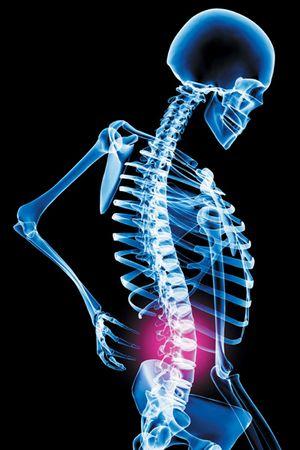
Most people have experienced back pain sometime in their life. The causes of back pain are numerous; some are self-inflicted due to a lifetime of bad habits. Other back pain causes include accidents, muscle strains, and sports injuries. Although the causes may be different, most often they share the same symptoms.
The symptoms for back pain are:
- Persistent aching or stiffness anywhere along your spine, from the base of the neck to the hips.
- Sharp, localized pain in the neck, upper back, or lower back -- especially after lifting heavy objects or engaging in other strenuous activity.
- Chronic ache in the middle or lower back, especially after sitting or standing for extended periods.
Call Your Doctor If:
- You feel numbness, tingling, or loss of control in your arms or legs. This may signal damage to the spinal cord.
- The pain in your back extends downward along the back of the leg. You may be suffering from sciatica.
- The pain increases when you cough or bend forward at the waist. This can be the sign of a herniated disc.
- The pain is accompanied by fever. You may have a bacterial infection.
- You have dull pain in one area of your spine when lying in or getting out of bed. If you are over 50 you may be suffering from osteoarthritis.
Pain Management: Sciatica
Sciatica is a common type of pain affecting the sciatic nerve, a large nerve extending from the lower back down the back of each leg.
What Are the Symptoms of Sciatica?
- Pain in the rear or leg that is worse when sitting
- Burning or tingling down the leg
- Weakness, numbness or difficulty moving the leg or foot
- A constant pain on one side of the rear
- A shooting pain that makes it difficult to stand up
Sciatica usually affects only one side of the lower body. Often, the pain extends from the lower back all the way through the back of the thigh and down through the leg. Depending on where the sciatic nerve is affected, the pain may also extend to the foot or toes.
For some people, the pain from sciatica can be severe and debilitating. For others, the pain from sciatica might be infrequent and irritating, but has the potential to get worse.
Seek immediate medical attention with any symptoms of progressive lower extremity weakness and/or loss of bladder or bowel control.
What Causes Sciatica?
Sciatica is caused by irritation of the root(s) of the lower lumbar and lumbosacral spine.
Additional common causes of sciatica include:
- Lumbar spinal stenosis (narrowing of the spinal canal in the lower back)
- Degenerative disc disease (breakdown of discs, which act as cushions between the vertebrae)
- Spondylolisthesis (a condition in which one vertebra slips forward over another one)
- Pregnancy
Other things that may make your back pain worse include being overweight, not exercising regularly, wearing high heels, or sleeping on a mattress that is too soft.
Asthma
Asthma Symptoms
People with asthma experience symptoms when the airways tighten, inflame, or fill with mucus. Common symptoms of asthma include:
- Coughing, especially at night
- Wheezing
- Shortness of breath
- Chest tightness, pain, or pressure
Still, not every person with asthma has the same symptoms in the same way. You may not have all of these symptoms, or you may have different symptoms at different times. Your asthma symptoms may also vary from one asthma attack to the next, being mild during one asthma attack and severe during another.
Some people with asthma may go for extended periods without having any symptoms, interrupted by periodic worsening of their symptoms called asthma attacks. Others might have asthma symptoms every day. In addition, some people with asthma may only have asthma during exercise or asthma with viral infections like colds.
Mild asthma attacks are generally more common. Usually, the airways open up within a few minutes to a few hours. Severe attacks are less common but last longer and require immediate medical help. It is important to recognize and treat even mild symptoms to help you prevent severe episodes and keep asthma under better control.
Early Asthma Symptoms
Early warning signs are changes that happen just before or at the very beginning of an asthma attack. These asthma attack symptoms may start before the well-known symptoms of asthma and are the earliest signs that your asthma is worsening.
In general, these signs are not severe enough to stop you from going about your daily activities. But by recognizing these signs, you can stop an asthma attack or prevent one from getting worse. Early warning signs include:
- Frequent cough, especially at night
- Losing your breath easily or shortness of breath
- Feeling very tired or weak when exercising
- Wheezing or coughing after exercise
- Feeling tired, easily upset, grouchy, or moody
- Decreases or changes in lung function as measured on a peak flow meter
- Signs of a cold, or allergies (sneezing, runny nose, cough, nasal congestion, sore throat, and headache)
- Trouble sleeping
If you have early warning signs or symptoms, you should take more asthma medication as described in your asthma action plan.
Asthma Symptoms in Children
Asthma affects as many as 10% to 12% of children in the United States and is the leading cause of chronic illness in children. For unknown reasons, the incidence of asthma in children is steadily increasing. While asthma symptoms can begin at any age, most children have their first asthma symptoms by age 5.
Asthma is characterized by inflammation of the bronchial tubes with increased production of sticky secretions inside the tubes. Not all children with asthma wheeze. Chronic coughing with asthma may be the only obvious sign, and a child’s asthma may go unrecognized if the cough is attributed to recurrent bronchitis.
Arthritis
Arthritis Symptoms
Of more than 100 different kinds of arthritis, these are the most common types and their symptoms:
Osteoarthritis Arthritis Symptoms
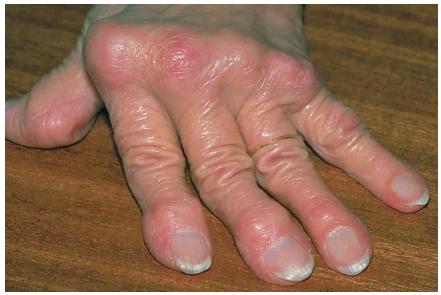
Osteoarthritis / Osteoarthrosis (OA, also known as degenerative arthritis, degenerative joint disease, arthrosis or in more colloquial terms "wear and tear"), is a condition in which low-grade inflammation results in pain in the joints, caused by wearing of the cartilage that covers and acts as a cushion inside joints. As the bone surfaces become less well protected by cartilage, the patient experiences pain upon weight bearing, including walking and standing. Due to decreased movement because of the pain, regional muscles may atrophy, and ligaments may become more lax. OA is the most common form of arthritis. The word is derived from the Greek word "osteo", meaning "of the bone", "arthro", meaning "joint", and "itis", meaning inflammation, although many sufferers have little or no inflammation.
Rheumatoid Arthritis Symptoms
Rheumatoid arthritis (RA) is traditionally considered a chronic, inflammatory autoimmune disorder that causes the immune system to attack the joints. It is a disabling and painful inflammatory condition, which can lead to substantial loss of mobility due to pain and joint destruction. RA is a systemic disease, often affecting extra-articular tissues throughout the body including the skin, blood vessels, heart, lungs, and muscles. About 60% of RA patients are unable to work 10 years after the onset of their disease.
Gout Arthritis Symptoms
Causes sudden, severe attacks, usually in the big toe, but any joint can be affected. A metabolic disorder in which uric acid builds up in the blood and crystals form in joints and other places. Drugs and attention to diet can control gout. Affects about 1 million Americans (70 to 80 percent men), with first attack starting between 40 and 50 years of age.
Ankylosing Spondylitis Arthritis Symptoms
A chronic inflammatory disease of the spine that can result in fused vertebrae and rigid spine. Often milder and harder to diagnose in women. Most people with the disease also have a genetic marker known as HLA-B27. Affects about 318,000 Americans, usually men between the ages of 16 and 35.
Juvenile Arthritis Symptoms
The most common form is juvenile rheumatoid arthritis. Arthritis diagnosis, treatment, and disease characteristics are different in children and adults. Some children recover completely; others remain affected throughout their lives. Affects about 200,000 Americans.
Psoriatic Arthritis Symptoms
Bone and other joint tissues become inflamed, and, like rheumatoid arthritis, it can affect the whole body. Affects about 5 percent of people with psoriasis, a chronic skin disease. Likely to affect fingers or spine. Symptoms are mild in most people but can be quite severe. Affects about 160,000 Americans.
Systemic Lupus Erythematosus Symptoms
Involves skin, joints, muscles, and sometimes internal organs. Symptoms usually appear in women of childbearing age but can occur in anyone at any age. Also called lupus or SLE, it can be mild or life threatening. Affects at least 131,000 Americans, nine to ten times as many women as men.
Septic arthritis
Septic arthritis is the invasion of the joint space by an infectious agent which produces arthritis. The usual etiology is bacterial, but viral, mycobacterial, and fungal arthritis occur occasionally. Bacteria are either carried by the bloodstream from an infectious focus elsewhere, introduced by a skin lesion that penetrates the joint, or by extension from adjacent tissue (e.g. bone or bursae).
Other forms
Arthritis can develop as a result of an infection. For example, bacteria that cause gonorrhea or Lyme disease can cause arthritis. Infectious arthritis can cause serious damage, but usually clears up completely with antibiotics. Scleroderma is a systemic disease that involves the skin, but may include problems with blood vessels, joints, and internal organs. Fibromyalgia syndrome is soft-tissue rheumatism that doesn't lead to joint deformity, but affects an estimated 5 million Americans, mostly women. The approximate number of cases in the United States of some common forms of arthritis.